A crypto airdrop is a claim with a deadline, an eligibility filter and a tax rule. I explain the mechanics, the real costs and the scams, with dated sources.

Crypto Airdrops: How They Work, What They Cost and How to Avoid Scams

Sources read on November 13, 2026
A crypto airdrop looks like free money. In practice it is a claim with a deadline, an eligibility filter and a tax rule attached.
For more than a year I published a monthly list of airdrops to chase. I stopped, and this page replaces all of those lists.
Here I explain the mechanics, the real costs and the scams. Nothing here is investment advice, and no airdrop is a promise of income.
- What an airdrop is
- Tokens a project sends or lets you claim, usually for past activity
- Who decides
- The project, using a snapshot and rules it often publishes only afterward
- Ethereum swap fee today
- About $0.09 at 0.133 gwei
- Arbitrum user drop
- 1.162 billion ARB, 11.62% of the initial supply
- US tax view
- Ordinary income at fair market value once you control the tokens
- Biggest risk I found
- Fake claim sites that drain the wallet you connect
Gas read on Etherscan on November 13, 2026, at 5:34 a.m. UTC. Arbitrum, IRS, HMRC and FBI sources are linked in the sections below.
What a Crypto Airdrop Is and What It Is Not
An airdrop is a distribution of new tokens to many wallet addresses at once. A token is a digital asset created by a smart contract, a program that runs on a blockchain.
Projects use airdrops to hand out governance votes, reward early users or attract attention. Some tokens land in your wallet automatically. Most must be claimed on a website before a deadline.
HM Revenue and Customs gives a useful plain definition. It describes an airdrop as an allocation of tokens, often as part of a marketing campaign, sent to selected people.
An airdrop is not a salary, a bonus with fixed terms or a guaranteed reward. The project can change its criteria, cut your allocation or never launch a token at all.
It is also not a market price. Trading after the token lists sets the value of what you receive. That value can move fast in either direction.
How Projects Decide Who Gets Tokens
Almost every airdrop starts with a snapshot. A snapshot is a record of wallet activity at one block. A block is a batch of transactions written to the chain together.
The project then scores wallets against criteria. Arbitrum, an Ethereum layer 2 network, published its full rules after the fact. That makes it a clean example to study.
Its snapshot was taken on February 6, 2023. Wallets earned points for bridging funds, transacting across several months, interacting with many contracts and moving larger sums.
A wallet needed at least 3 points to qualify, and scores were capped at 15. Points earned before the Nitro upgrade on August 31, 2022, counted double.
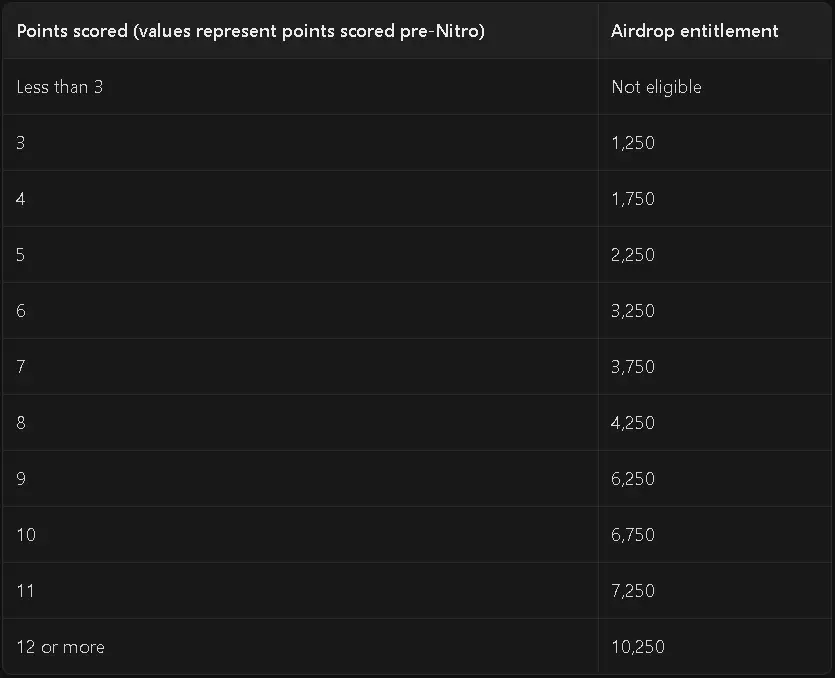
The table shows how steep the curve was. Three points paid 1,250 ARB, while 12 or more paid 10,250. A wallet that only qualified after Nitro got half, so the floor was 625 ARB.
Then came the filters against Sybil wallets. A Sybil attack is one person running many wallets to collect many allocations. Arbitrum removed a point from wallets whose whole history fit inside 48 hours.
It also removed a point when a wallet held under 0.005 ETH and had touched no more than one contract. Wallets flagged as Sybils in an earlier Hop protocol hunt were excluded outright.
Hop’s own drop shows how harsh this can be. Security firm Beosin reported that 10,253 of 43,058 initially eligible addresses were flagged as Sybils, about 24%.
| Arbitrum rule | Value |
|---|---|
| Snapshot | February 6, 2023 |
| Minimum to qualify | 3 points |
| Allocation range | 625 to 10,250 ARB |
| Sent to users | 1.162 billion ARB, 11.62% |
| Sent to DAOs | 113 million ARB, 1.13% |
| Claim window | March 23 to September 24, 2023 |
Source: Arbitrum DAO airdrop eligibility and distribution, read November 13, 2026.
What Farming an Airdrop Really Costs
Airdrop farming means using a protocol in the hope of qualifying for a future token. Nobody publishes the rules in advance, so every action is a guess.
The first cost is gas, the fee you pay the network for each transaction. On November 13, 2026, Ethereum gas was very cheap, so I priced a typical routine at that level.
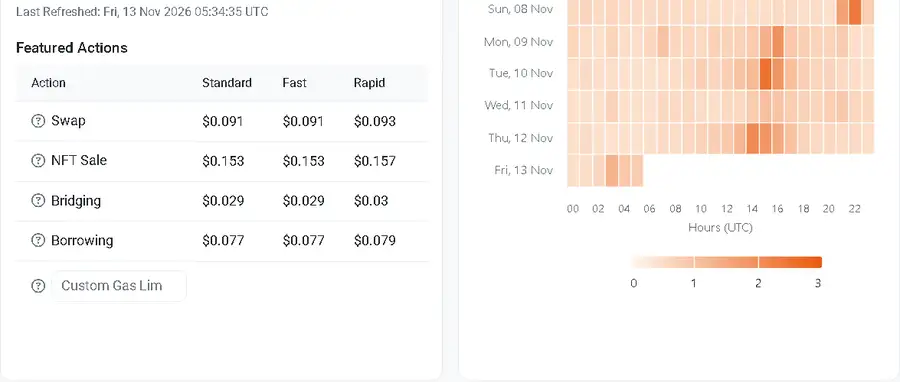
| Routine | At 0.133 gwei | At 3 gwei |
|---|---|---|
| 40 swaps | $3.64 | $82 |
| 10 bridge actions | $0.29 | $7 |
| Total | $3.93 | $89 |
Swap $0.091 and bridging $0.029 per action on Etherscan. The 3 gwei column scales those costs to the busiest hours on the same week’s heatmap.
The gap between the two columns is the lesson. The same routine can cost 22 times more depending on the hour you run it.
Gas is rarely the biggest cost, though. Capital parked in a protocol is exposed to bugs, hacks and price moves. Meanwhile, the token you wait for may never come.
Time is a cost too. Hours spent on daily clicks have value. Sybil filters can still score you at zero if your pattern looks automated.
Farming is a bet with unknown rules. Spend only money and time you would accept losing completely. Never borrow to farm, and never move savings into an unaudited protocol for a possible token.
Claim Day: Crashed Sites, Deadlines and the First Price
Claim day is when the token becomes yours to take. It is also the most chaotic day in an airdrop’s life, and Arbitrum’s was no exception.
On March 23, 2023, CoinDesk reported that the official claim website crashed under traffic that morning. By late that day, about 240,000 eligible addresses still had not claimed.
That left 428 million ARB unclaimed, about 37% of the user allocation. Chaos like this is exactly when fake claim links spread fastest.
The first price was just as unstable. CoinDesk saw prints near $14 on some venues before ARB settled around $1.42 the same day. Early quotes on thin markets mean little.
Deadlines are final. Arbitrum’s claim closed on September 24, 2023, and its docs now state the token is no longer claimable. Missing the window means losing the allocation.
Many newer airdrops add vesting, a schedule that releases tokens in parts over months. Read the claim page closely, because a large headline number can arrive in small slices.
Airdrop Scams: Fake Claim Sites, Drainers and Approval Traps
Scammers love airdrops because the victims expect to connect a wallet. The trick is to make that connection happen on the wrong website.
The FBI described the pattern in a public service announcement on August 4, 2023. Criminals hijack or clone a real project’s social accounts and post an urgent, limited offer.
The link leads to a copy of the real site that asks you to connect a wallet. Connecting gives access to a drainer, a smart contract built to move your coins and NFTs out.
The FBI notes that the stolen assets then pass through mixers and exchanges to hide the trail. Recovery after that point is rare.
Approval traps are quieter. A token approval is a permission that lets a contract spend a token from your wallet. One careless signature can grant an unlimited allowance to an attacker.
Unknown tokens that suddenly appear in a wallet are another lure. Their names often carry a website address. Visiting it to “claim” or “sell” is how the trap closes.
No real airdrop needs your seed phrase. A seed phrase is the list of words that controls your wallet. Any site, message or support agent asking for it is a thief. The same goes for any request to send coins to unlock a claim.
How I Check an Airdrop Before I Connect a Wallet
I run the same checks every time, and I never skip one because a deadline feels close. Urgency is the scammer’s main tool, so I treat it as a warning sign.
| Check | Where | Red flag |
|---|---|---|
| Official link | Project docs and site | Link only in replies or DMs |
| Domain | Address bar | Extra letters, odd endings |
| Account | Profile history | New or renamed account |
| Rules | Published criteria | No rules, only hype |
| Signature | Wallet pop-up | Approval for a coin you hold |
| Payment | Claim page | Fee to unlock tokens |
The FBI’s own advice matches this list. Check whether the project ever announced surprise drops, compare account details carefully and look for misspelled domains.
I also read what the wallet asks me to sign. A claim should call a claim function. An approval for a token I already own has no place in a claim.
If the project has audits or open-source contracts, I note who audited them and when. An audit lowers risk but never removes it.
How Airdrops Are Taxed in the US and UK
Taxes are where free tokens stop being free. I am not a tax adviser, and rules differ by country, so treat this as a starting point.
In the United States, the IRS set its position in Revenue Ruling 2019-24 in October 2019. An airdrop following a hard fork creates ordinary income for the person who receives it.
The income equals the fair market value when the tokens are recorded on the ledger. Timing depends on dominion and control, meaning the moment you can actually transfer or sell them.
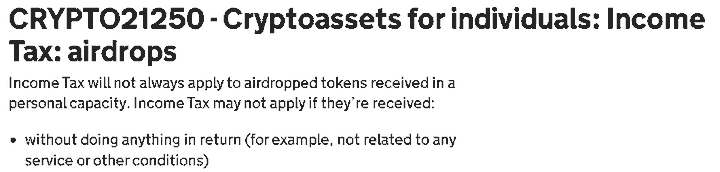
In the United Kingdom, HMRC takes a different line. Income Tax may not apply when you receive tokens personally, give nothing in return and are not trading crypto.
If the tokens come in return for a service or expected action, HMRC treats them as income. Selling them later can also trigger Capital Gains Tax, even when nothing was due on receipt.
A falling price does not cancel the tax. Under the US rule, income is valued when you gain control of the tokens. If the price drops later, you may owe tax on a value you never sold at. Record the date and value of every claim.
Wallet Hygiene: Burner Wallets and Revoking Approvals
Most airdrop losses happen in the wallet, not on the chart. A few habits keep a bad signature from turning into an empty account.
I keep a separate burner wallet for claims and experiments. A burner wallet is a fresh address holding only what one task needs. My savings stay elsewhere, ideally on a hardware wallet.
A hardware wallet is a small device that keeps your private keys offline. My crypto wallets guide explains how hot and cold storage differ.
After any claim, I review token approvals. The Etherscan token approval checker lists them per address and lets you revoke the ones you no longer need.
I also protect the accounts around the wallet. Email and exchange logins deserve two-factor authentication, because a hijacked inbox can reset almost everything else.
When I eventually move tokens to an exchange, I convert them before sending onward. If you want stable value in between, a stablecoin is the usual stop.
Why I Stopped Publishing Monthly Airdrop Lists
From September 2024 to November 2025, I posted a list of airdrops every month. Each one promised a chance to earn, and each went stale within weeks.
Those lists framed airdrops as income. They named projects that might never launch a token, and they said little about filters, taxes or drainers.
Every old monthly address now points to this page. I would rather give you one guide that stays accurate than fourteen lists that age badly.
My main work on Joker.gg is reading the fine print of crypto platforms. The same habit drives my crypto casino comparisons, where every bonus is priced against its own terms.
If you are new to the basics, start with what DeFi is and how a decentralized exchange works. Both explain where most airdrop tokens end up trading.
Crypto Airdrop FAQ
What is a crypto airdrop?
It is a distribution of new tokens to many wallets, usually for past activity or for holding another coin. Most must be claimed on the project’s site before a deadline.
Are crypto airdrops free money?
No. You may pay gas, lock capital or spend hours with no reward. The value can fall fast after listing, and tax may still be due.
How do projects decide who qualifies for an airdrop?
They take a snapshot of wallet activity and score it against criteria. Arbitrum required at least 3 points and cut points from wallets that looked like Sybils.
What is airdrop farming?
It means using a protocol in the hope of qualifying for a future token. The rules are unknown in advance, so the effort may earn nothing at all.
How much does it cost to farm an airdrop on Ethereum?
On November 13, 2026, a swap cost about $0.09 and a bridge about $0.03 on Etherscan. The same routine costs about 22 times more at a 3 gwei peak.
How can I tell if an airdrop is a scam?
Warning signs are links shared only in replies or DMs, misspelled domains, urgent deadlines and fees to unlock tokens. A request for your seed phrase is always a scam.
Do I need to pay to claim an airdrop?
You pay network gas for the claim transaction, nothing more. A site asking you to send coins first, or to pay a release fee, is a scam.
Are crypto airdrops taxable in the US?
Under IRS Revenue Ruling 2019-24, an airdrop after a hard fork is ordinary income. It is valued when you gain control of the tokens. Ask a tax adviser about your own case.
Are crypto airdrops taxable in the UK?
HMRC says Income Tax may not apply if you give nothing in return and do not trade crypto. Tokens received for a service count as income, and later sales may face Capital Gains Tax.
What happens if I miss an airdrop claim deadline?
You usually lose the allocation for good. Arbitrum’s claim closed on September 24, 2023, and its docs now say the token is no longer claimable.



Best Exchanges



150% up to $2,000 on poker or casino, one bonus per first deposit. Casino winnings are capped at $500,000 a month.

Up to 5,000 USDT welcome package with 30x wagering. Terms read on November 11, 2026.



New Casinos

Every deposit must be wagered 5 times before a withdrawal. Welcome: 500% over three deposits, bets under 2 USDT count.

New accounts wager $10 once, then withdraw as they like. Rank-up rewards return up to 20% of the house edge.
No welcome bonus. Every deposit must be wagered once before a withdrawal, about 3.47 USDT per 100 on a 96.53% slot.
Best Exchanges
150% up to $2,000 on poker or casino, one bonus per first deposit. Casino winnings are capped at $500,000 a month.